Lost in the Soul of Chiang Mai: Where Culture Lives in Every Alley
Ever wondered what it feels like to wander through a city that breathes history and art with every step? I roamed Chiang Mai not with a checklist, but with curiosity — uncovering temples humming with prayer, hidden galleries, and centuries-old workshops. This isn’t just travel; it’s connection. Here’s how getting lost led me to Thailand’s cultural heartbeat. In a world where tourism often means ticking off landmarks, Chiang Mai offers a rare alternative: a chance to move slowly, listen closely, and feel culture not as a performance, but as a lived rhythm. This journey is not about seeing more — it’s about experiencing deeply.
The Spirit of Wandering: Why Slow Exploration Reveals True Culture
Wandering is not the absence of direction; it is the presence of openness. In Chiang Mai, letting go of rigid plans revealed a city that unfolds in whispers rather than announcements. The Old City, encircled by an ancient moat and crisscrossed with narrow lanes, rewards those who walk without urgency. One morning, I turned down a side alley simply because sunlight filtered through a canopy of frangipani trees. Moments later, I found myself in a quiet courtyard where an elderly woman placed jasmine garlands at a small shrine, her movements slow and reverent. There was no signage, no tour group — only a private moment of devotion, unfolding as it has for generations.
This kind of discovery is not accidental; it is cultivated. Psychological studies on mindfulness and travel suggest that when people slow down and reduce goal-oriented behavior, their capacity for cultural absorption increases. By stepping away from structured itineraries, travelers engage more fully with their surroundings, noticing subtle details — the way a monk folds his alms bowl, how children bow before entering a temple, or the rhythm of a street vendor shaping dumplings by hand. These are not curated experiences; they are everyday expressions of a living culture.
Chiang Mai, with its blend of spiritual tradition and artisanal heritage, is uniquely suited to this kind of exploration. Unlike destinations built for mass tourism, its cultural fabric is woven into daily life. Temples function as community centers, markets double as social hubs, and homes often double as workshops. When you wander without a fixed destination, you stop being a spectator and begin to participate — even if only through quiet observation. The city does not perform for visitors; it simply lives, and those who move slowly are allowed to witness it.
Letting go of the need to “see everything” also reduces travel fatigue, a common barrier to meaningful engagement. Instead of rushing from one temple to the next, I found greater fulfillment in lingering at a single site, watching how light shifted across stone carvings as the day progressed. This approach aligns with the Thai concept of *sanuk* — finding joy in the process, not just the outcome. Wandering, in this sense, becomes a form of respect: a willingness to meet a place on its own terms, rather than forcing it to conform to a tourist’s schedule.
Ancient Temples as Living Cultural Hubs
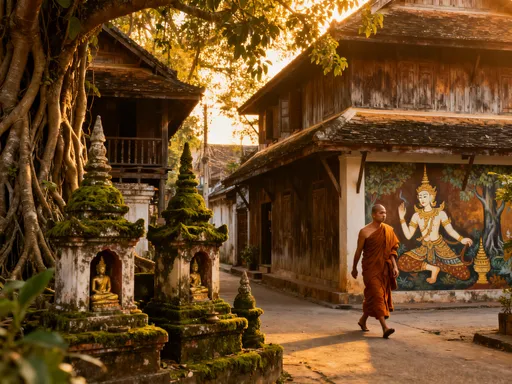
In Chiang Mai, temples are not relics — they are living, breathing centers of community life. Wat Phra Singh, located in the heart of the Old City, is often crowded with visitors drawn to its golden *ubosot* (ordination hall) and revered Buddha image. But beyond the postcard views, the temple functions as a daily sanctuary for locals. At dawn, barefoot residents approach with offerings of flowers, incense, and food, placing them at shrines with quiet devotion. Monks in saffron robes move through the complex, some chanting in low tones, others studying scriptures beneath shaded pavilions. The air carries the scent of sandalwood and candle wax, mingling with the soft chime of temple bells.
Wat Chedi Luang, once home to the Emerald Buddha and now known for its partially ruined 15th-century stupa, offers an even more intimate glimpse into spiritual practice. On a quiet morning, I watched as a group of children practiced *wai khru*, a traditional ceremony honoring teachers, under the guidance of a senior monk. Nearby, a woman knelt before a small shrine, her lips moving in silent prayer. Unlike in many tourist-heavy temples, there was no sense of performance. These acts were not for an audience; they were part of the rhythm of life.
The architecture of these *wats* is impressive, but their true significance lies in their function. Temples in Chiang Mai serve as places of education, meditation, and social gathering. They host merit-making ceremonies, seasonal festivals, and even community meetings. Monks often serve as counselors, educators, and cultural custodians. For visitors, understanding this role transforms a temple visit from a visual experience into a cultural one. Dressing modestly — covering shoulders and knees — is not just a rule; it is a sign of respect for the sacredness of the space.
To witness culture in motion, timing matters. Early mornings, between 6:00 and 8:00 a.m., offer the most authentic moments. This is when alms-giving (*tak bat*) occurs, as monks walk in silent procession to receive food from waiting devotees. The ritual, practiced daily for centuries, is a powerful reminder of the interdependence between monastic and lay communities. Visiting during major festivals like Songkran (Thai New Year) or Loy Krathong also reveals the temple’s communal role, as locals gather to pray, release floating lanterns, and participate in traditional dances.
Hidden Courtyards and Community Art Spaces
Beyond the main roads and tourist maps, Chiang Mai’s creative soul thrives in hidden courtyards and family-run studios. These spaces, often tucked behind wooden gates or nestled in quiet sois, are not designed for mass visitation — they exist to preserve and share culture in its most authentic form. One afternoon, I followed the sound of hand drums to a restored teak house where a group of musicians gathered for a casual *kantrum* session. *Kantrum*, a traditional Lanna music style, features fast-paced rhythms played on barrel drums and reed instruments. I was invited to sit and listen, then to try my hand at a simple beat. No fees, no performances — just music shared among neighbors and curious visitors.
Another day, I stumbled upon a small workshop where a woman taught *saa* paper-making, a centuries-old craft using mulberry bark. The process was meticulous: soaking fibers, pounding them into pulp, and pressing them into sheets under the sun. She explained that her family had practiced this art for generations, passing it down from mother to daughter. Today, she teaches small groups not for profit, but to ensure the craft does not disappear. I spent an hour trying to create a single sheet, my hands clumsy compared to hers. Yet she smiled, corrected my technique, and praised my effort. This was not a demonstration; it was a dialogue.
These intimate venues are vital to Chiang Mai’s cultural continuity. Unlike commercial galleries or souvenir shops, they do not package tradition for consumption. Instead, they invite participation, fostering a deeper understanding of Lanna heritage. Many are run by artists, elders, or cultural activists who see their work as stewardship. Some host weekly music nights, weaving circles, or meditation sessions open to all. They are not listed on every travel app, and that is part of their value — they remain spaces of authenticity, not spectacle.
Finding them requires curiosity and a willingness to engage. Talking to local shop owners, asking monks for recommendations, or simply walking without a map often leads to these discoveries. Social media, when used thoughtfully, can also guide travelers to community-led initiatives. The key is approaching these spaces with humility, recognizing that one is a guest, not a customer. In doing so, the boundary between traveler and local begins to blur, allowing for genuine connection.
The Old City’s Cultural Pulse: Walking the Moat with Purpose
The ancient moat that encircles Chiang Mai’s Old City is more than a historical boundary — it is a living artery of cultural continuity. Walking its full 4-kilometer loop offers not just scenic views, but a journey through layers of history and daily life. Along the eastern stretch, near Tha Phae Gate, vendors sell *khao soi*, the region’s iconic coconut curry noodle soup, using recipes passed down through generations. The aroma of fried noodles, turmeric, and chili fills the air, drawing both locals and visitors to small plastic tables under striped umbrellas.
Further north, near Wat Phan Tao, elders gather under banyan trees to play *makruk*, traditional Thai chess. The game, slower and more strategic than Western chess, reflects a pace of life that values patience and foresight. I once sat and watched for nearly an hour as two men in their seventies moved carved wooden pieces with deliberate care, occasionally pausing to sip jasmine tea. No one kept score; the game itself was the reward. These moments, repeated daily, are not performances — they are traditions preserved through practice.
Embedded along the moat are countless *spirit houses*, small ornate shrines dedicated to guardian spirits of the land. Locals place fresh flowers, incense, and miniature offerings daily, believing that harmony with the unseen world ensures peace and prosperity. These shrines, often overlooked by tourists, are a testament to the animist roots that coexist with Buddhism in Northern Thai culture. They remind visitors that Chiang Mai’s spirituality is not confined to temples — it permeates the landscape.
Walking the moat with intention transforms a simple route into a pilgrimage of awareness. Each step reveals another thread in the city’s cultural fabric: a monk cycling home with a grocery bag, a mother teaching her child to fold lotus flowers from paper, a street artist sketching portraits for spare change. These are not isolated incidents; they are part of a continuous tapestry. The moat, once a defensive structure, now serves as a boundary that contains and protects a way of life — one that values community, reverence, and quiet dignity.
Museums Done Differently: From Lanna Wisdom to Contemporary Voice
Chiang Mai’s museums defy the stereotype of sterile, glass-case displays. Instead, they offer spaces where culture is not just preserved, but reinterpreted. The Lanna Folklife Museum, located near Wat Phra Singh, presents everyday objects — handwoven textiles, farming tools, cooking utensils — with quiet reverence. There are no flashy exhibits or audio guides; the artifacts speak for themselves. A faded indigo *sinh* (traditional skirt) tells of a weaver’s skill; a wooden rice pounder evokes the rhythm of village life. The museum does not explain everything — it invites contemplation.
In contrast, the MAIIAM Contemporary Art Museum, located just outside the Old City, bridges tradition and modernity. Its striking modern architecture houses works by Thai and international artists who engage with social, political, and cultural themes. One exhibit featured a series of photographs documenting the lives of hill tribe elders, their faces etched with stories of migration, resilience, and change. Another displayed sculptures made from recycled materials, commenting on consumerism and environmental loss. While the medium is contemporary, the message often circles back to heritage, identity, and memory.
Together, these institutions represent two essential approaches to cultural preservation: one rooted in documentation, the other in dialogue. The Lanna Folklife Museum safeguards the past, ensuring that future generations understand the tools, textiles, and traditions that shaped their ancestors. MAIIAM, meanwhile, asks how that heritage lives today — how it adapts, resists, and evolves. Both are necessary. One without the other risks either stagnation or disconnection.
What unites them is their rejection of spectacle. Neither museum feels like a tourist trap. Visitors are often locals, students, or serious art enthusiasts. The atmosphere is contemplative, even reverent. I recall standing before an exhibit on hill tribe weaving, where a single textile was displayed alongside a recording of the weaver describing her process. Her voice, soft but firm, spoke of patterns that told stories of migration, family, and land. In that moment, I felt a deeper respect than any guidebook could inspire. Culture, I realized, is not just seen — it is heard, felt, and remembered.
Crafting Connection: Hands-On Cultural Experiences That Matter
Understanding a culture begins with doing, not just watching. In Chiang Mai, some of the most meaningful experiences come from participation — however humble. I joined a small group to make *joss sticks* with volunteers at a local temple. The process was simple: rolling thin paper around a bamboo stick, then dipping it in fragrant powder made from sandalwood and herbs. Yet it was also meditative. As we worked in silence, a senior volunteer explained that each stick represented a prayer, a wish for peace. When we finished, we placed them in bundles at the temple altar. I left with dust on my hands and a quiet sense of purpose.
Another day, I learned *lin mai*, the traditional art of floral arrangement using fresh jasmine, marigolds, and rose petals. My teacher, a woman in her sixties, demonstrated how to twist stems into lotus shapes without wire or tape. My first attempts were lopsided, the petals falling apart. But she laughed kindly and showed me again, her fingers moving with practiced grace. “It’s not about perfection,” she said. “It’s about offering beauty with your hands.” By the end, I had created a small, imperfect bloom — and a memory far more lasting than any photograph.
These experiences are not staged for tourists. They are real activities, often tied to seasonal festivals or temple needs. Some programs welcome visitors through community centers or cultural NGOs. The key is finding ethical, small-scale opportunities — not those that turn tradition into a commodity. “Cultural cosplay,” where visitors wear costumes and mimic rituals without understanding, does a disservice to the very heritage it claims to celebrate. Authentic engagement requires respect, patience, and a willingness to learn, not perform.
For families, these workshops offer a way to travel meaningfully across generations. Children learn by doing, asking questions, and building connections. One mother I met brought her daughter to a rice-harvesting demonstration, where they helped plant seedlings in a small community field. “She’ll forget the name of the temple,” the mother said, “but she’ll remember how the mud felt between her toes.” That, perhaps, is the essence of deep travel — not collecting sights, but gathering sensations, emotions, and moments of shared humanity.
Wandering with Wisdom: How to Travel Deeply in Chiang Mai
To travel deeply in Chiang Mai is to move with intention, humility, and openness. The city rewards those who slow down, who listen more than they speak, and who accept that some of the best moments are unplanned. Base yourself within the Old City if possible — its compact size makes walking feasible, and its streets are alive with morning rituals and evening gatherings. Stay in family-run guesthouses or quiet guest rooms above shops, where owners often share local tips and homemade meals.
Learn a few phrases in Thai, especially greetings and expressions of gratitude. A simple *sawasdee khrap* (hello) or *khob khun khrap* (thank you) goes a long way in building rapport. Observe cultural cues: remove shoes before entering homes or temples, avoid touching someone’s head, and never point your feet at a person or image. These gestures are not just polite — they reflect a deeper respect for the values that shape daily life.
Visit temples early, when the air is cool and the light soft. Avoid loud conversations or flash photography. Sit quietly if you can, even for a few minutes, and let the atmosphere settle around you. If monks are present, do not approach them unless they initiate conversation. Respect quiet hours, especially during meditation or study periods. Remember, these are not attractions — they are sacred spaces.
Seek out community-led initiatives rather than commercial tours. Ask your guesthouse owner, a local artist, or a temple volunteer for recommendations. Support small workshops, family-run restaurants, and independent galleries. Your presence, when respectful, becomes part of the cultural exchange. And when you get lost — which you will — do not rush to find your way. Pause. Breathe. Look around. The alley you’re standing in might be where a grandmother teaches her granddaughter to fold banana leaves, or where a musician tunes his flute before evening practice. These are the moments that stay with you, not because they were planned, but because they were real.
Chiang Mai does not reveal itself all at once. Its soul is not in grand monuments, but in the quiet spaces between — the pause before a prayer, the shared laugh over a failed craft, the scent of incense lingering on your clothes. To wander here is not to lose your way, but to find something deeper: a connection not just to a place, but to the enduring rhythm of human life. And in that stillness, you may discover not just the city’s heart, but your own.