You Won’t Believe What Sana’a’s Skyline Hides – A Niche Cityscape Journey
Sana’a doesn’t just rise from the desert—it soars, with ancient tower houses piercing the Yemeni sky like stone ladders to the clouds. I never expected a cityscape this dramatic outside a fantasy film. Every alley, rooftop, and sunlit wall tells a story centuries old. This isn’t just architecture; it’s living history breathing through narrow streets and golden facades. If you crave authenticity in urban landscapes, Sana’a will redefine what a city can feel like. Few capitals on Earth carry such a powerful sense of time suspended, where the past is not preserved behind glass but lived in, repaired by hand, and passed down through generations. To walk its lanes is to step into a different understanding of urban life—one shaped by climate, community, and craftsmanship rather than steel and speed.
First Glimpse: The City That Defies Expectations
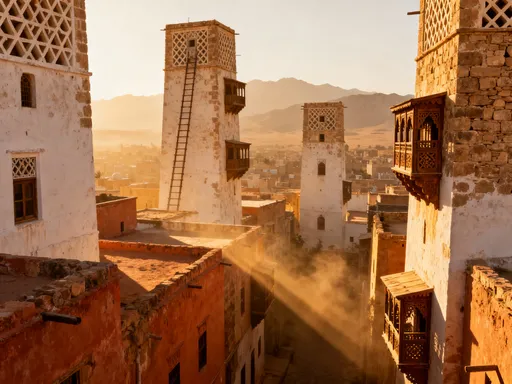
Arriving at the edge of Sana’a, perched high in the Yemeni highlands at over 2,200 meters above sea level, the city unfolds like a mirage carved from earth and light. The air is crisp, the sky impossibly blue, and the basin below fills with an intricate mosaic of ochre-toned buildings stacked closely together, rising tier upon tier. From this vantage, the skyline appears almost surreal—a dense cluster of vertical structures that defy common assumptions about Yemen as a land of barren mountains and scattered villages. This is not a city built outward, but upward, shaped by centuries of adaptation to limited space and a harsh environment. The initial impression is one of awe: how could such a complex, towering urban form emerge in a region so often misunderstood?
For many travelers, even those well-versed in Middle Eastern architecture, Sana’a comes as a revelation. It challenges the stereotype of Yemen as a place defined solely by conflict or isolation. Instead, what emerges is a capital of extraordinary cultural depth, where urban design reflects both resilience and artistry. The density of the old city, particularly within the historic walls, speaks to a tradition of communal living and vertical expansion long before modern skyscrapers existed elsewhere. Unlike contemporary high-rises built for economic efficiency, Sana’a’s towers were developed out of necessity, security, and a deep connection to familial and neighborhood bonds.
What makes this first view so powerful is not just the visual impact, but the emotional resonance it carries. There’s a sense of discovery, of uncovering something hidden, almost forgotten by the wider world. Yet here it stands—enduring, intricate, and profoundly human. The contrast between expectation and reality is sharp. Where some might anticipate decay or desolation, they find instead a vibrant, textured cityscape pulsing with quiet life. Children’s laughter echoes through alleys, shopkeepers arrange baskets of qat under faded awnings, and the scent of cardamom and warm bread drifts from open doorways. Sana’a does not perform for visitors; it simply exists, on its own terms.
The Soul of the Skyline: Tower Houses of Old Sana’a
At the heart of Sana’a’s skyline are its iconic multi-story tower houses, some reaching up to eight or nine levels, constructed from rammed earth and stone, then coated in a protective layer of white gypsum plaster. These structures, many dating back several centuries, are not relics but lived-in homes, continuously maintained and adapted by their inhabitants. Each building follows a traditional layout: lower floors used for storage or animals, middle levels for family living, and upper floors opening onto private rooftop terraces. The façades are adorned with rows of ornate wooden windows—known locally as rawashin—featuring geometric latticework that allows ventilation and light while preserving privacy, a key principle in Yemeni domestic life.
What sets these buildings apart globally is their embodiment of pre-modern vertical urbanism. Long before elevators or steel frames, the people of Sana’a developed a sophisticated architectural response to limited land and a need for security. In a region where tribal affiliations and family honor were central to social order, living in close proximity while maintaining privacy required careful design. The tower house fulfilled both needs: families could live in relative seclusion, yet remain deeply connected to their neighbors through shared walls, rooftop interactions, and communal courtyards. This form of urban density was not imposed by modern economics but evolved organically over generations.
In 1986, UNESCO recognized the significance of this architectural heritage by designating the Old City of Sana’a a World Heritage Site. It became one of the earliest examples of a living historic city to receive such status, not because it was frozen in time, but because it continued to function as a dynamic urban center while preserving its traditional form. The construction techniques themselves—using locally sourced materials, natural insulation, and passive cooling methods—are now studied by architects and sustainability experts worldwide. The thick earthen walls regulate indoor temperatures, keeping interiors cool during the day and warm at night, a passive adaptation to the region’s extreme climate.
Yet these tower houses are more than feats of engineering; they are expressions of identity. The whitewashed window frames, often painted with colorful geometric patterns in red, green, or black, serve both aesthetic and symbolic purposes. Each family’s choice of design reflects personal taste, regional influences, and sometimes even tribal affiliations. Together, they create a skyline that is not uniform but harmoniously varied—a patchwork of individual expression within a shared architectural language.
Walking the Layers: A Street-Level Perspective
To truly understand Sana’a, one must descend from the panoramic viewpoints and enter the narrow, winding alleys of the old city. Here, the urban experience shifts from visual spectacle to immersive sensation. The streets, many too narrow for vehicles, are paved with worn stone, their surfaces shaped by centuries of foot traffic. Sunlight filters in intermittently, blocked by overhanging upper floors that nearly touch across the alley, creating shaded passageways that stay cool even at midday. The air carries a blend of scents: cumin and coriander from spice stalls, the faint earthiness of damp plaster after a rare rain, and the sweet smoke of incense drifting from open doorways.
Sound plays a crucial role in this sensory landscape. Footsteps echo against stone walls, mingling with distant calls to prayer, the clinking of copperware from a nearby workshop, and the low hum of conversation from shaded courtyards. There is no rush, no blaring horns—only the rhythm of daily life unfolding at a human pace. Children dart between doorways, women in colorful thobes carry woven baskets, and elderly men sit on low stools sipping tea outside small shops. Every turn reveals a new detail: a hand-carved wooden lintel, a hidden courtyard with a fig tree, a staircase leading up to a private balcony.
The verticality of the city shapes not only its appearance but the very structure of social life. Families live stacked atop one another, yet maintain distinct private spaces. Rooftops serve as extensions of the home—places for evening gatherings, drying laundry, or simply enjoying the cool night air. During festivals or family celebrations, these terraces come alive with music and laughter, visible only to neighbors who share the same intimate urban fabric. Privacy is preserved not through isolation, but through careful design: high walls, inward-facing windows, and the unspoken rules of community respect.
This layered existence fosters a unique sense of belonging. Residents know their neighbors not just by name, but by the rhythm of their daily routines, the patterns of their window shutters, the way they greet each other at dawn. The city functions as a network of interlocking lives, where architecture supports social cohesion. For the visitor, this creates a profound sense of being welcomed into a world that operates on its own quiet logic—one that values continuity, craftsmanship, and community over speed and spectacle.
Rooftop Revelations: Seeing Sana’a from Above
One of the most transformative experiences in Sana’a is gaining access to a rooftop terrace at sunrise or sunset. With permission from a local family or guide, ascending to these private vantage points offers a perspective few outsiders ever witness. As the sun rises over the eastern hills, the entire city awakens in golden light. The whitewashed window frames glow, the mud-brick walls take on a warm amber hue, and the patchwork of flat roofs begins to stir with life. Women spread out mats to dry herbs, children play tag between terraces, and the call to prayer echoes across the basin, amplified by the natural acoustics of the stone landscape.
From this height, the city reveals its true complexity. The skyline is not a flat silhouette but a three-dimensional tapestry of terraces, domes, minarets, and courtyards. The geometric precision of the rawashin creates a rhythmic pattern across entire blocks, while the irregular placement of rooftop additions—small shelters, drying racks, or satellite dishes—adds a layer of contemporary adaptation. In the distance, the outline of the city’s ancient walls fades into the surrounding mountains, which rise like sentinels around the highland basin. On clear days, the peaks appear dusted with snow, a rare sight in the Arabian Peninsula.
It is here, above the alleys, that one begins to understand Sana’a not just as a collection of buildings, but as a living organism. The elevation shifts perception: what seemed chaotic at street level reveals an underlying order, a harmony born of centuries of incremental growth. Each rooftop tells a story—of family, of resilience, of adaptation. Some are adorned with potted plants, others with prayer mats left out to air. Solar panels and water tanks sit beside traditional wind catchers, symbols of a city navigating modernity without losing its soul.
At dusk, the city transforms once more. The fading light softens the edges of the towers, casting long shadows across the alleys. Families gather on their terraces to break fast during Ramadan or share evening meals. The air fills with the aroma of stewed lentils, grilled meat, and fresh flatbread. As the sky deepens to indigo, the first stars appear above a city that, despite its challenges, continues to shine with quiet dignity. To stand on a rooftop at this hour is to feel both humbled and inspired—a witness to a way of urban life that is increasingly rare in the modern world.
Hidden Patterns: Color, Craft, and Urban Identity
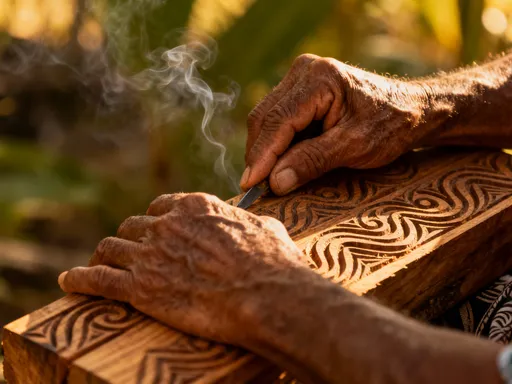
Beneath the grand scale of Sana’a’s skyline lies a world of intricate detail, where craftsmanship defines beauty and identity. Up close, the city’s façades reveal a rich language of ornamentation: hand-carved wooden beams, geometric stucco reliefs, and brightly painted window frames that form repeating patterns across entire streets. The rawashin, often made from acacia or juniper wood, are masterpieces of Islamic geometric design, their latticework allowing airflow while diffusing sunlight into delicate patterns on interior floors. Each balcony is unique, reflecting the skill of local artisans and the preferences of the families who commissioned them.
These decorative elements are not merely aesthetic—they are integral to the city’s cultural fabric. The use of color, though restrained compared to other Islamic cities, carries meaning. White plaster symbolizes purity and protection from the sun, while the red, green, and black accents on window frames often echo regional traditions or family heritage. Some patterns incorporate ancient symbols believed to ward off evil, passed down through generations of craftsmen. The preservation of these details relies on a dwindling number of skilled workers who continue to practice traditional techniques, often using tools and methods unchanged for centuries.
Yet this visual harmony faces growing threats. Natural erosion from wind and rare but intense rainfall gradually wears away the plaster and weakens wooden elements. More pressing is the challenge of urban expansion and limited resources for restoration. As newer construction spreads beyond the old city walls, the contrast in materials and scale becomes stark. Concrete buildings lack the thermal efficiency and aesthetic cohesion of traditional designs, often appearing jarringly out of place. Meanwhile, inside the historic district, some families struggle to maintain their homes due to economic hardship and the difficulty of sourcing authentic materials.
Despite these pressures, efforts to preserve Sana’a’s heritage continue. Local initiatives, supported by international organizations, focus on training young artisans, documenting traditional techniques, and providing low-interest loans for home restoration. These programs emphasize community involvement, recognizing that true preservation must come from within. The city’s identity is not just in its buildings, but in the people who care for them. Every repaired window, every repainted façade, is an act of cultural resistance—an affirmation that beauty, history, and craftsmanship still matter.
Beyond the Old Walls: Modern Sana’a’s Quiet Contrast
Stepping outside the ancient walls of the old city, the character of Sana’a shifts subtly. The newer districts, developed over the past century, reflect the pressures and possibilities of modern urban life. Buildings here are typically made of concrete, with flat roofs, metal grilles, and satellite dishes. Streets are wider, designed for vehicles, and commercial activity is more visible—electronics shops, mobile phone vendors, and roadside cafés serving sweet tea and fried snacks. The pace feels faster, though still far from the frenetic energy of global megacities.
Yet even in these modern areas, the influence of traditional design persists. Many homes incorporate elements of Yemeni architecture—courtyards for privacy, shaded balconies, and interior foyers that buffer the outside world. The color palette remains earth-toned, blending with the natural landscape. Minarets and mosques remain central landmarks, anchoring neighborhoods with spiritual and social continuity. This is not a city that has abandoned its past, but one that adapts it quietly, layer by layer.
What stands out in modern Sana’a is not the contrast, but the resilience. Despite decades of political instability and economic difficulty, the city continues to function, to grow, and to care for its heritage. Families rebuild after damage, artisans pass down their skills, and communities maintain their rhythms. There is a quiet determination in the way life unfolds here—a refusal to be defined solely by hardship. The skyline may be changing, but the soul of the city endures, carried forward in the daily acts of repair, memory, and belonging.
Why This Cityscape Matters: A Call for Deeper Travel
Sana’a challenges the conventions of modern tourism. It does not offer luxury resorts, shopping malls, or curated experiences designed for mass appeal. Instead, it invites a different kind of journey—one of patience, respect, and deep observation. To visit Sana’a is to engage with a city that resists simplification, that cannot be captured in a single photograph or summarized in a guidebook. It demands presence, humility, and a willingness to listen.
In an era when travel often means chasing novelty or comfort, Sana’a stands as a counter-narrative. It reminds us that the most meaningful destinations are not always the easiest to reach. True cultural immersion requires slowing down, looking closely, and recognizing the value of places that exist outside the global spotlight. This is niche travel at its most profound: not about ticking off landmarks, but about understanding how people live, build, and preserve identity in the face of change.
The city’s skyline, with its ancient towers and handcrafted details, teaches lessons about sustainability, community, and resilience. It shows how architecture can respond to climate and culture without relying on modern technology. It demonstrates how beauty can emerge from necessity, and how tradition can evolve without being erased. These are not just historical insights—they are urgent ideas for a world grappling with environmental and social challenges.
Preserving Sana’a is not just the responsibility of Yemenis; it is a global concern. This city is part of humanity’s shared heritage, a testament to what urban life can be when shaped by care, continuity, and craftsmanship. For those who have the privilege to witness it, the call is clear: to travel deeper, to see beyond headlines, and to honor the quiet dignity of places like Sana’a. In doing so, we do not just discover a city—we rediscover what cities can mean.