You Won’t Believe How Malta’s Public Spaces Steal the Show
When I first wandered into a quiet square in Valletta, I didn’t expect to fall in love with a city’s soul. But Malta’s public spaces—its sunlit piazzas, harbor-side promenades, and village greens—are where the island truly breathes. More than just pretty backdrops, these spaces blend history, community, and daily life in ways that surprise even seasoned travelers. This is not just about sightseeing—it’s about belonging, even if just for an afternoon. From the echoing stillness of Mdina’s ancient gates to the lively buzz of Sliema’s waterfront, each public space tells a story shaped by centuries of Mediterranean crossroads, faith, and resilience. They are not museums behind glass, but living rooms for an entire nation.
The Heartbeat of Maltese Life: What Makes Public Spaces in Malta Unique
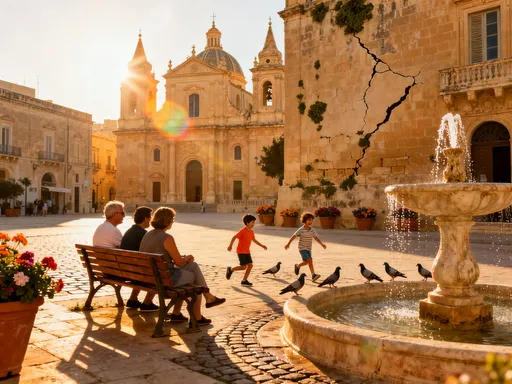
Malta’s public spaces are not designed for spectacle alone—they are woven into the very rhythm of daily life. Unlike the grand but often ceremonial plazas of continental Europe, Maltese piazzas serve as communal living rooms, where conversations spill from café tables into cobblestone courtyards and where children play beneath centuries-old church facades. This organic integration of space and society stems from a deep cultural tradition rooted in Mediterranean urbanism, where public life has always been inseparable from civic and religious identity. The concept of the piazza as a social anchor can be traced back to Roman forums, but in Malta, it evolved uniquely under successive waves of Phoenician, Arab, Norman, and later European influences, each layer contributing to a townscape where openness and enclosure coexist in delicate balance.
One of the defining characteristics of Maltese public spaces is their intimate scale. Most towns across the island—whether in the south like Marsaxlokk or the central village of Rabat—center around a single, often irregularly shaped square, typically adjacent to the parish church. These spaces were never intended for mass gatherings but for neighborly interaction, local markets, and religious processions. This human-scale design fosters a sense of familiarity and ownership among residents. Unlike modern urban developments that prioritize vehicular traffic, Maltese towns have historically been pedestrian-first, a legacy that continues to influence how people experience public life today. The absence of wide boulevards or sprawling plazas does not diminish their importance; rather, it enhances their authenticity and warmth.
Equally significant is the way these spaces reflect communal values. In many villages, the piazza is not only a social hub but also a site of local governance, where announcements are made and civic matters discussed. The proximity to the parish church underscores the historical fusion of spiritual and civic life—a tradition that remains visible during feast days and community events. These spaces are not curated for tourists; they are lived-in, weathered by time and use, with chipped stone benches, uneven flagstones, and laundry lines strung between balconies. It is precisely this imperfection that gives them soul. Visitors do not merely observe these places—they are invited, often unintentionally, to become part of the scene, sipping coffee at a corner kiosk or pausing to listen to an impromptu accordion performance.
Valletta’s Grand Stages: Where History Meets Daily Rhythm
As Malta’s capital and a UNESCO World Heritage site, Valletta offers some of the most striking examples of how historic public spaces remain vibrant in contemporary life. Laid out in a rigid grid by the Knights of St. John in the 16th century, the city was designed with order, defense, and ceremony in mind. Yet today, its squares and thoroughfares pulse with the energy of everyday Maltese life. St. George’s Square, at the heart of the city, exemplifies this duality. By morning, it is a quiet expanse flanked by the Grandmaster’s Palace and the Cathedral; by noon, it fills with office workers on lunch break, families exploring on foot, and street vendors selling coffee and pastizzi. In the evening, the same space transforms again, lit by soft golden lamps, as locals and tourists stroll beneath baroque facades.
City Gate, once a grand ceremonial entrance, has undergone significant redevelopment in recent decades. The new design by renowned architect Renzo Piano reimagined the gateway not as a monumental relic but as a functional threshold between the modern world and the historic city. The open plaza just beyond invites movement and gathering, serving as both a transit point and a destination in itself. Nearby, the Triton Fountain roundabout—though technically a traffic feature—has become an informal meeting spot, especially in the evenings when the illuminated sculpture creates a shimmering focal point. These spaces demonstrate how urban planning can respect heritage while adapting to modern needs, prioritizing pedestrian access and visual continuity over car-centric infrastructure.
What sets Valletta apart is the seamless coexistence of preservation and use. Unlike some heritage cities where historic centers feel frozen in time, Valletta’s public areas are deeply integrated into daily routines. The rehabilitation of open spaces over the past two decades—removing vehicle barriers, restoring fountains, and improving lighting—has made the city more walkable and inviting. Public seating, shaded arcades, and strategically placed greenery enhance comfort without compromising historical integrity. Even during peak tourist seasons, the local presence remains strong, ensuring that these spaces do not become mere stage sets for visitors. The success of Valletta’s urban model lies in its ability to honor the past while embracing the present, proving that heritage and livability are not mutually exclusive.
Mdina’s Quiet Drama: The Power of Absence in Public Design
If Valletta is Malta’s grand theater, Mdina is its silent chamber—a city of whispers, shadows, and restrained elegance. Perched on a limestone ridge in the island’s center, Mdina’s public spaces are defined as much by what is absent as by what is present. There are no bustling markets, no street performers, no traffic. Entry is limited, and silence is preserved, creating an atmosphere of stillness that feels almost sacred. The few open areas within the city walls—such as the Main Gate courtyard and the small square near St. Paul’s Cathedral—are not designed for crowds but for contemplation. Here, public space is not about activity but about presence—about the experience of being within a place that has witnessed centuries of change without surrendering its dignity.
The urban design of Mdina reflects its origins as a fortified city, originally built for defense and later refined during the medieval and baroque periods. Its narrow, winding streets open unexpectedly into small, enclosed piazzas, each framed by honey-colored stone buildings with shuttered windows and wrought-iron balconies. These spaces feel intimate, almost secretive, as if they belong to a private world. The absence of commercial signage, loudspeakers, or modern advertising enhances the sense of timelessness. Even the sounds are muted—the clip-clop of a horse-drawn carriage, the distant chime of a church bell, the rustle of leaves in a courtyard garden. This deliberate restraint makes Mdina’s public spaces uniquely powerful, offering visitors a rare opportunity to slow down and absorb the weight of history.
Tourism is carefully managed to preserve this atmosphere. While visitors are welcome, access is controlled, and large tour groups are discouraged from entering during peak hours. There are no fast-food outlets or souvenir stalls within the city walls, ensuring that the experience remains authentic. Public seating is minimal, encouraging short, reflective visits rather than prolonged stays. This approach stands in contrast to more commercialized heritage sites, where authenticity is often sacrificed for convenience. In Mdina, the value of public space lies not in its utility but in its emotional resonance—a reminder that not every place must be filled with noise and movement to be meaningful. For many visitors, especially those seeking respite from the pace of modern life, Mdina offers a rare gift: the power of quiet.
Sliema and St. Julian’s: Modern Life Along the Waterfront
On the eastern coast, the towns of Sliema and St. Julian’s present a different vision of public space—one shaped by 20th-century urban development and the island’s growing connection to the sea. Once a quiet seaside retreat, Sliema has evolved into a bustling urban center, its long promenade stretching along the Marsamxett Harbour. This waterfront corridor is one of Malta’s most popular public spaces, used daily by walkers, joggers, and families enjoying the sea breeze. The promenade is lined with cafes, benches, and shaded areas, creating a continuous public realm that blends recreation, leisure, and social interaction. Unlike the historic cores of Valletta or Mdina, Sliema’s public spaces are modern in design, with clean lines, contemporary lighting, and an emphasis on accessibility.
Just north, St. Julian’s Spinola Bay offers a more cosmopolitan atmosphere. Once a fishing village, the area has been transformed into a vibrant hub of dining and entertainment, centered around a picturesque harbor lined with colorful traditional boats known as luzzus. The surrounding plaza and walkways are animated in the evenings, when locals and tourists gather at outdoor restaurants or stroll along the water’s edge. Despite the commercial development, the space retains a human scale, with narrow alleys leading to hidden courtyards and quiet corners. The success of Spinola Bay lies in its ability to balance economic activity with public enjoyment—a challenge many coastal cities struggle to meet.
Yet, these modern spaces face real challenges. Overcrowding during peak seasons, especially in summer, can strain infrastructure and reduce comfort. The proliferation of high-rise developments along the coast has raised concerns about overdevelopment and the loss of open space. Some residents feel that the character of Sliema is being eroded by excessive commercialization, with public areas increasingly dominated by restaurants and retail rather than community use. In response, local authorities have initiated efforts to reclaim space for pedestrians, including the expansion of green areas and the introduction of traffic-calming measures. These actions reflect a growing awareness that even in modern urban environments, public spaces must serve the needs of all residents, not just tourists or businesses.
Village Festas and the Living Calendar of Public Use
One of the most remarkable aspects of Malta’s public spaces is their transformation during village festas—annual religious celebrations that turn ordinary piazzas into stages of light, sound, and devotion. These events, deeply rooted in Catholic tradition, are not mere festivals but expressions of community identity and faith. In towns like Mosta, Qormi, and Victoria, the local parish church becomes the focal point, but the entire public square is reimagined. Streets are closed, facades are draped in banners, and thousands of fairy lights are strung overhead, creating a canopy of illumination that transforms the space after dark.
The festa is a multisensory experience. Brass bands rehearse in the square days in advance, their music echoing through the streets. On the main evening, a solemn religious procession winds through the town, carrying the statue of the patron saint through the decorated streets. But the celebration also includes exuberant fireworks, some of the most elaborate in Europe, launched from temporary structures built in the piazza. These displays are not commercial spectacles but community-funded efforts, often organized by local clubs and volunteers who spend months preparing. The entire town participates—older residents watching from balconies, children chasing sparklers, families sharing meals at outdoor tables.
What makes these events so powerful is their collective ownership. Unlike state-sponsored festivals, Maltese festas are driven by local pride and tradition. The public square, usually a place of quiet routine, becomes a living theater of faith and festivity. This cyclical transformation reinforces the idea that public space is not static—it evolves with the rhythms of community life. For visitors, witnessing a festa offers a rare glimpse into the heart of Maltese culture, where religion, art, and social bonds converge in shared celebration. It is a reminder that the most meaningful public spaces are not just designed but lived.
Accessibility and Inclusivity: Who Really Uses These Spaces?
As Malta’s public spaces continue to evolve, questions of accessibility and inclusivity have taken on greater importance. While many areas, especially in newer developments like Sliema, are designed with universal access in mind, historic towns present unique challenges. Narrow streets, uneven surfaces, and limited ramp access can make it difficult for seniors, people with mobility impairments, or parents with strollers to navigate places like Mdina or the upper levels of Valletta. Recognizing this, Maltese authorities have undertaken efforts to improve infrastructure without compromising heritage. Tactile paving has been introduced in key areas, public seating has been expanded, and shade structures have been added to protect against the Mediterranean sun.
Local councils have also begun to prioritize inclusive design in public space renovations. In some villages, new lighting and smoother paving have improved safety and comfort, especially for older residents who rely on daily walks in the piazza. Play areas for children have been integrated into larger squares, and community feedback is increasingly sought in urban planning decisions. These efforts reflect a broader shift toward creating spaces that serve everyone, not just the able-bodied or tourist population. However, progress is uneven, and more work is needed to ensure that all Maltese citizens can fully participate in public life.
Tourism adds another layer to this discussion. While visitors bring economic benefits, their presence can sometimes marginalize local use of public spaces. In popular areas, the demand for outdoor seating and commercial activity can push out informal gatherings or quiet moments of rest. Balancing these competing needs requires thoughtful planning and community engagement. The goal should not be to limit tourism but to ensure that public spaces remain truly public—accessible, welcoming, and reflective of the communities they serve.
Lessons from Malta: Designing Public Spaces That Matter
Malta’s public spaces offer valuable lessons for cities around the world. In an era of rapid urbanization and digital isolation, the Maltese model demonstrates how physical spaces can foster connection, continuity, and identity. What makes these places so effective is not their size or grandeur but their rootedness in culture and daily life. They are not designed as isolated attractions but as integral parts of the urban fabric, shaped by history, faith, and community. Their success lies in their ability to be both functional and meaningful—places where people don’t just pass through but belong.
One of the most important takeaways is the value of scale. Malta’s towns are walkable, intimate, and human-centered. There are no vast, impersonal plazas that intimidate or exclude. Instead, public spaces are sized to encourage interaction, whether it’s a quick chat between neighbors or a shared meal during a festa. This attention to scale creates environments where people feel safe, seen, and connected. Another lesson is continuity—Malta has preserved its public spaces not by freezing them in time but by allowing them to evolve with changing needs. Restoration projects in Valletta, accessibility improvements in village squares, and the adaptive reuse of waterfront areas all show how heritage and modernity can coexist.
Perhaps most importantly, Malta reminds us that public spaces are not luxuries but necessities. They are where democracy is practiced in small ways—where opinions are exchanged, traditions are passed down, and communities are strengthened. For travelers, these spaces offer more than scenic views; they offer a chance to witness a way of life where public life is still vibrant and valued. For urban planners, they serve as a model of how design can support social cohesion. In a world where many cities struggle with alienation and disconnection, Malta’s piazzas, promenades, and village greens stand as quiet but powerful affirmations of what public life can be.