You Won’t Believe What I Found Shopping in Vik, Iceland
When you think of Vik, Iceland, black sand beaches and dramatic cliffs probably come to mind—but shopping? Honestly, I didn’t expect to find anything worth buying either. Yet tucked between the cozy cafes and local craft corners were hidden gems: handmade wool sweaters, volcanic stone jewelry, and one-of-a-kind souvenirs that actually feel authentic. This tiny village delivers a surprisingly rich, intimate retail experience—if you know where to look. Far from the polished boutiques of Reykjavik or the crowded souvenir lanes of more tourist-heavy towns, Vik offers something quieter, more personal. Here, every purchase feels like a conversation with the land and its people. From the warmth of hand-knit wool to the weight of a lava rock pendant, shopping in Vik isn’t about consumption—it’s about connection.
First Impressions: Why Shopping in Vik Feels Different
Vik, with a population barely exceeding 300, is not a place you’d expect to find a meaningful shopping experience. Nestled at the southernmost tip of Iceland’s mainland, it’s a village shaped by wind, ocean, and volcanic terrain. Most visitors come for Reynisfjara’s basalt columns or the dramatic Dyrhólaey cliffs, then pass through the town in a hurry. But those who pause—those who step off the Ring Road and into the cluster of red-roofed buildings near the church—discover a different rhythm. The shops here aren’t franchises or mass-market stalls. They’re small, family-run spaces where the owner might hand you a cup of coffee while you browse or explain how a sweater was knitted by her aunt in a nearby farm.
What sets Vik apart is its authenticity. Unlike tourist centers where the same magnets, mugs, and plastic figurines repeat from store to store, Vik’s retail scene reflects its isolation and self-reliance. Because shipping is expensive and supply chains are fragile, locals prioritize quality, durability, and craftsmanship. This mindset extends to what they sell. There’s no room for disposable souvenirs when every square foot of shelf space counts. Instead, the items on display are made to last—handcrafted, meaningful, and deeply rooted in Icelandic tradition. The absence of chain stores isn’t a limitation; it’s a strength. It means every purchase supports someone’s livelihood, not a distant corporation.
The scale of shopping here also contributes to its charm. You won’t find sprawling malls or endless rows of stalls. The entire commercial heart of Vik fits within a few blocks, centered around the main road that runs parallel to the beach. This intimacy allows for genuine interaction. Shopkeepers remember faces. They ask where you’re from, recommend nearby hikes, or point you to a hidden trail behind the hills. In this way, shopping becomes part of the travel experience—not a side activity, but a window into local life. It’s not about ticking off a checklist of buys; it’s about slowing down, engaging, and leaving with something that carries a story.
The Heart of Local Commerce: Vik’s Main Street Scene
Walking through Vik’s central stretch, the first thing you notice is how unassuming the shops appear. There are no flashy signs or neon displays. Most storefronts are modest, with hand-painted signs and windows that fog up on rainy days. Yet behind these simple facades lies a surprising depth of local commerce. The area around the iconic white church and the visitor center forms the nucleus of daily life. Here, small businesses cluster together, creating a micro-economy that serves both residents and travelers.
One of the most prominent features is the collection of souvenir stands, but these are far from generic. Many are attached to cafes or guesthouses, run by families who have lived in the region for generations. You’ll find shelves lined with hand-carved wooden figurines, miniature turf houses, and postcards featuring local landscapes photographed by residents. The difference is in the details: a note explaining that the sheep wool in a decorative ball was sheared from nearby highlands, or a tag indicating that a candle was made using traditional beeswax methods. These aren’t just items for sale—they’re fragments of a lifestyle.
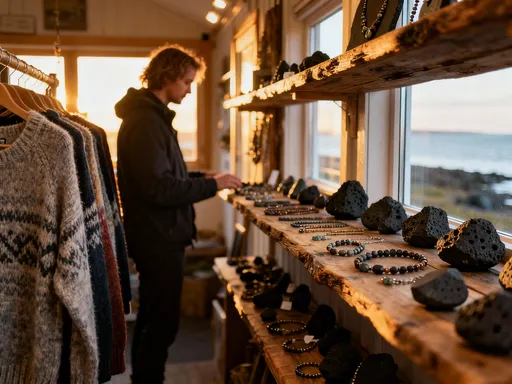
Textile boutiques are another cornerstone of Vik’s shopping identity. Unlike larger cities where wool sweaters are mass-produced, here you’ll find pieces knitted in homes, often by older women who’ve been perfecting their craft for decades. Some shops display sweaters still on the needles, waiting for final seams. The smell of lanolin and raw wool lingers in the air, mingling with the scent of coffee from adjacent cafes. Glass doors rattle with each gust of wind, a reminder of the village’s exposure to the North Atlantic. It’s a sensory experience as much as a commercial one—sound, smell, and touch all contributing to the atmosphere.
Art stalls and galleries, though few, offer another layer of cultural expression. Local artists use volcanic rock, driftwood, and recycled materials to create sculptures and wall art. Some pieces depict mythological creatures from Icelandic folklore, while others capture the stark beauty of the surrounding landscape. These works aren’t made for export; they emerge from a deep connection to place. Buying one feels less like acquiring décor and more like taking home a piece of Vik’s soul. The absence of aggressive marketing or high-pressure sales only deepens the sense of authenticity. You’re not being sold to—you’re being invited in.
Handmade Wool Is King: The Lopapeysa Story
No discussion of shopping in Vik is complete without addressing the lopapeysa—the iconic Icelandic wool sweater that has become a national symbol. More than just a garment, the lopapeysa is a cultural artifact, born from centuries of adaptation to harsh climates. Its distinctive circular yoke, often patterned with geometric motifs, is instantly recognizable. But in Vik, the lopapeysa isn’t just a tourist item; it’s a living tradition, knitted by hand and worn with pride by locals of all ages.
What makes the lopapeysa so special is the wool itself. Icelandic sheep, a breed isolated for over a thousand years, produce a unique dual-coated fleece. The outer layer, called tog, is water-resistant and durable. The inner layer, þel, is soft and insulating. When spun together, they create a yarn that is both rugged and warm—perfect for enduring Iceland’s unpredictable weather. In Vik, many sweaters are made from this raw, unprocessed wool, retaining its natural oils and earthy scent. This gives them a texture and resilience that machine-made versions simply can’t replicate.
Travelers looking for an authentic lopapeysa will find several options in Vik. Some are sold through women’s cooperatives, where local knitters contribute pieces and share profits. Others come from family-run shops where the owner might show you photos of her grandmother knitting by the fire. Prices vary, but a genuine hand-knit sweater typically ranges from $180 to $300, depending on complexity and wool quality. While this may seem steep compared to factory-made versions in Reykjavik, the difference is clear in the craftsmanship. Each stitch is deliberate, each pattern unique. These sweaters are not fast fashion—they’re heirlooms in the making.
Wearing a lopapeysa from Vik means carrying a piece of Icelandic resilience. It’s a garment designed not for style alone, but for survival. Today, many visitors choose to buy one not just as a souvenir, but as a functional keepsake—something they can wear for years, even decades. And when they do, they’re not only supporting local artisans but also participating in a tradition that has helped Icelanders thrive in one of the world’s most extreme environments.
Beyond Souvenirs: Discovering Volcanic Craftsmanship
While wool dominates Vik’s textile scene, another material shapes the village’s artistic identity: volcanic rock. Formed by centuries of eruptions, the surrounding landscape is rich in basalt, obsidian, and lava stone. These materials, once seen as obstacles to farming and building, are now transformed into stunning works of art. In Vik’s small craft shops, you’ll find jewelry, coasters, candle holders, and decorative bowls made entirely from locally sourced stone.
The artisans behind these pieces often work in quiet studios on the outskirts of town, some in converted farm buildings or roadside cabins. Many are self-taught, having developed their skills through years of experimentation. They collect raw stone from nearby fields or beaches, then cut, polish, and shape it by hand. The process is slow and meticulous, requiring patience and precision. Each piece reflects the natural variation in the rock—no two are exactly alike. A necklace might showcase the deep black sheen of obsidian, while a bracelet reveals the fine crystalline structure of basalt. The weight of these items in your hand is grounding, a tangible reminder of the earth’s power.
What makes volcanic craftsmanship so meaningful is its sustainability. Unlike imported materials or synthetic products, these items are made from what the land provides. There’s no waste, no excess. The artisans work with what they can gather, respecting the environment that sustains them. When you purchase a lava rock pendant or a basalt dish, you’re not just buying a decoration—you’re acquiring a fragment of Iceland’s geological history. It’s a keepsake with depth, both literally and symbolically.
For travelers, these pieces offer a quieter alternative to traditional souvenirs. They don’t shout “I was here!” like a T-shirt or mug might. Instead, they whisper a story of fire, time, and transformation. Placed on a shelf or worn around the neck, they serve as subtle reminders of a place where nature reigns supreme. And because they’re made locally, each purchase directly supports the individuals who live and create in Vik, helping to sustain a fragile but vibrant creative economy.
Where Locals Shop: Grocery Runs and Practical Purchases
Beyond the craft shops and boutiques, Vik’s everyday commerce unfolds in its small grocery store and gas station shop. These unassuming spaces are where residents do their weekly shopping, and for observant travelers, they offer another dimension of cultural insight. The shelves are modestly stocked, with an emphasis on non-perishables, dairy, and preserved meats—necessities in a place where supply deliveries can be delayed by storms or road closures.
One of the most popular local products is skyr, the thick, protein-rich dairy product that has gained international fame. In Vik, it’s often sold in plain containers with minimal branding, a far cry from the flavored, sugar-laden versions found abroad. Locals eat it with fresh berries in summer or a drizzle of honey in winter. Another staple is rye bread, dark and dense, traditionally baked in geothermal ovens buried underground. The version sold in Vik’s stores may not be freshly made, but it carries the same rich, malty flavor. Travelers often buy loaves to take home, not just as snacks, but as edible souvenirs of Icelandic culinary tradition.
Smoked lamb is another specialty worth seeking out. Prepared using age-old methods, it’s rich, salty, and deeply flavorful. Sold in vacuum-sealed packages, it keeps well and makes a unique gift for food-loving friends. Equally distinctive is Icelandic licorice—often mixed with salmiakki, a salty ammonium chloride flavor that polarizes visitors. While not for everyone, it’s a beloved treat among locals and a conversation starter in any snack box.
Shopping in these everyday stores feels different from browsing tourist spots. There’s no curation for visitors, no English labels on every item. You’ll need to read Icelandic packaging or ask for help, which often leads to friendly exchanges with clerks or fellow shoppers. It’s in these moments—fumbling with coins, pointing at a jar of pickled vegetables, laughing at a mispronounced word—that cultural connection happens. And when you leave with a bag of local goods, you’re not just stocking up for the road—you’re taking part in the rhythm of daily life in a remote Icelandic village.
Timing, Cash, and Other Real Talk: Practical Tips for Shoppers
Shopping in Vik requires a bit more planning than in larger towns, and knowing the practical details can make all the difference. Most shops in the village operate on limited hours, especially outside the summer season. From October to April, many close by 5:00 PM, and some may not open at all on Sundays. During winter storms, closures can be unpredictable, so it’s wise to check locally or call ahead if possible. The peak season, from June to August, offers the most reliable access, with extended hours and pop-up stalls appearing near the beach and visitor center.
Another key consideration is payment. While most businesses accept credit cards, the internet connection in remote areas can be slow or unreliable. It’s not uncommon for card machines to take several minutes to process a transaction—or fail altogether. Having some Icelandic krona on hand is a smart backup. ATMs are available, but they may run out of cash during busy periods, so withdrawing in larger towns like Hella or Hafnarfjörður before arriving is recommended.
Stock levels can also be limited. Because goods must be transported over long distances, inventory is carefully managed. A popular sweater size or a specific type of jewelry might sell out quickly, especially in summer. If there’s something you’re hoping to buy, it’s best to visit shops early in the day. This also helps avoid crowds, as tour buses tend to arrive mid-morning. Visiting in the late afternoon or early evening often means quieter spaces and more time with shopkeepers, who are usually happy to share stories or recommendations when not overwhelmed by customers.
Finally, patience is essential. Things move at a different pace in Vik. Transactions take longer. Conversations meander. The wind howls, the lights flicker, and life unfolds without urgency. Embracing this rhythm—not fighting it—is part of the experience. When you slow down, you notice more: the texture of a wool blanket, the glint of a lava stone ring, the warmth in a shopkeeper’s smile. These moments, fleeting as they may be, are what make shopping in Vik unforgettable.
Shopping as Connection: How Small Purchases Support the Community
In a village as small as Vik, every purchase carries weight. Unlike in cities where consumer choices blend into the background, here, buying a sweater, a piece of jewelry, or a jar of local jam directly impacts someone’s livelihood. These businesses aren’t backed by investors or franchises—they’re run by individuals who depend on tourism to sustain their way of life. When you choose to buy handmade over mass-produced, you’re not just acquiring an object; you’re helping preserve a culture.
The economic reality of rural Iceland is fragile. Young people often move to Reykjavik or abroad for work, and maintaining services in remote areas is a constant challenge. Tourism helps bridge the gap, providing income that keeps homes heated, children in school, and traditions alive. By supporting local artisans and shopkeepers, travelers contribute to a cycle of resilience. A hand-knit lopapeysa funds a grandmother’s winter heating bill. A sale at a craft stall helps a young artist afford materials for her next piece. These connections, though invisible to most, are real and vital.
There’s also an environmental dimension to mindful shopping. When you buy locally made goods, you reduce the carbon footprint associated with imported products. You’re choosing items made with care, not shipped across oceans in plastic packaging. And because these pieces are built to last, they resist the throwaway culture that plagues so much of modern consumption. A wool sweater from Vik might cost more upfront, but it will last decades. A lava stone bowl won’t chip or fade. These are investments in quality, not quantity.
Ultimately, shopping in Vik is about more than souvenirs. It’s about intention. It’s about looking beyond the transaction and seeing the person behind the counter, the hands that made the product, the history woven into every thread and stone. When you leave Vik with a bag in hand, you’re not just carrying mementos—you’re carrying stories. And in that act, you become part of the village’s ongoing narrative, a quiet but meaningful thread in the fabric of its future.